

- A newer survey shows most SEOs now prefer digital PR over guest posting, but a separate survey shows a narrower split, largely because the first survey skewed toward agencies with bigger budgets.
- Digital PR wins on raw ranking power. It lands higher authority placements, can earn dozens of links from one story, and correlates more with AI search visibility since earned coverage carries more credibility.
- Guest posting wins on everything else. It’s cheaper, faster, and gives full control over anchor text and placement.
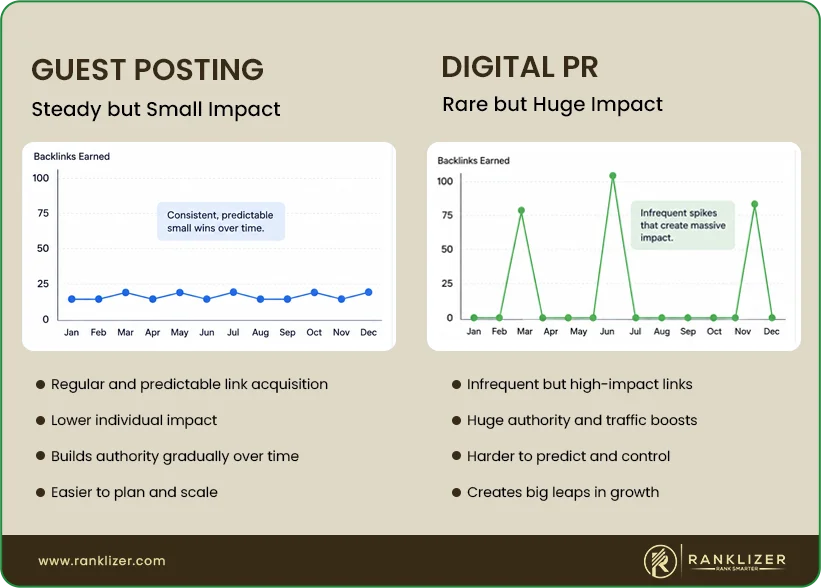
- Digital PR’s biggest weakness is inconsistency, since results depend on journalists responding, and outcomes swing between nothing and a huge win with little in between. Guest posting stays small but steady.
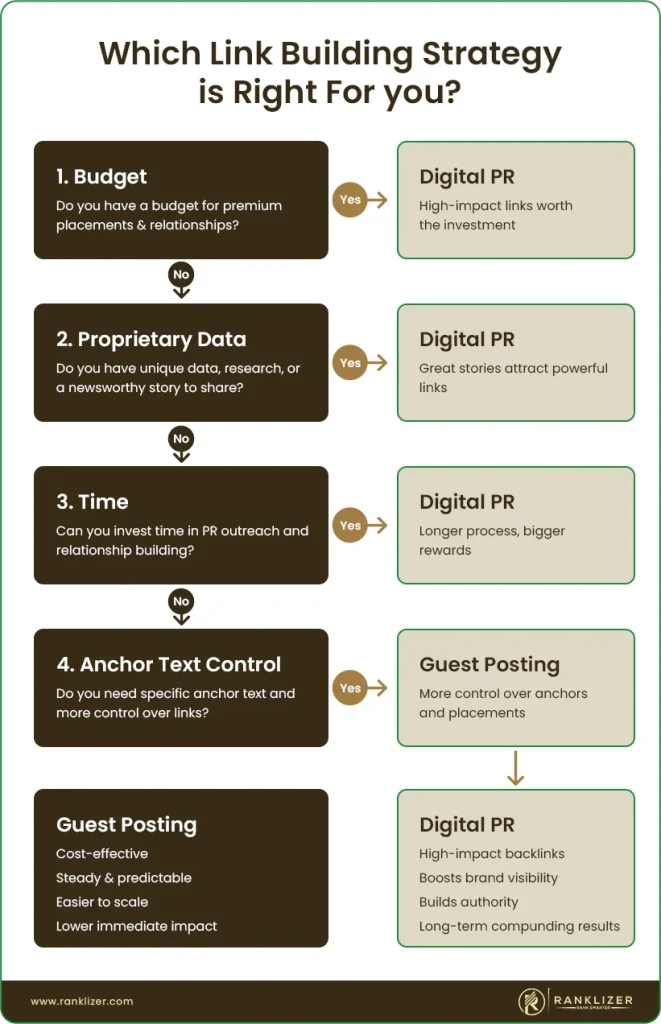
- Decide based on four factors: monthly budget, whether you have proprietary data or a real story, how fast you need links, and how much anchor text control matters.
- Verdict: with a limited budget and no proprietary data, lean heavily toward guest posting with some opportunistic PR. With a larger budget and real research capability, flip it and lean into digital PR for the higher ceiling.
A recent industry survey found that digital PR has overtaken guest posting as the top link-building method among SEO professionals, a spot guest posting had held for well over a decade. Before that finding gets folded into the next wave of “digital PR has won” articles, it’s worth actually examining rather than just repeating.
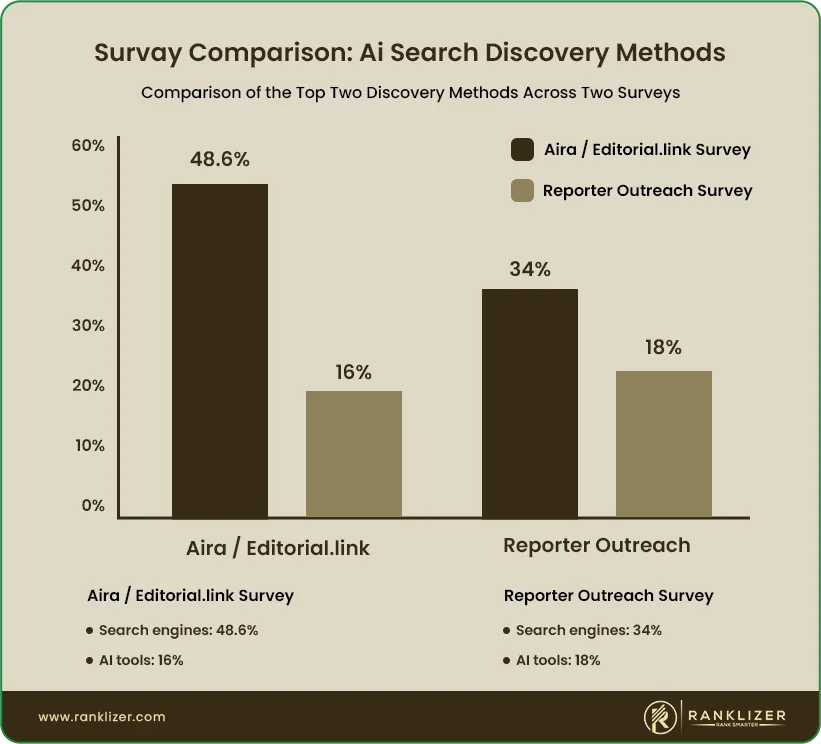
A separate survey on the state of link building paints a closer picture, with digital PR holding a modest lead over guest posting rather than a runaway one, and a notable share of respondents either undecided or planning to use both.
This isn’t another agency post proclaiming digital PR as the undisputed champion. It’s an attempt to balance some genuinely conflicting findings, give guest posting credit where it’s still earned, and offer a real decision-making guideline instead of the usual shrug of “use both.”
Why the Percentages Vary
The gap between the surveys isn’t a contradiction. It comes down to the composition of the samples and the wording of the questions. One survey’s more diverse respondent pool, weighted less heavily toward agency-side practitioners, is likely why its split is narrower than the other survey’s.
The pattern is the same for both, even if the numbers are different. Digital PR is the top performer in both surveys. However, the size of that lead is closely correlated with the weight of the sample on agencies and larger in-house teams, as opposed to freelancers, solo consultants and smaller businesses with more limited budgets.
Smaller respondent pools also magnify noise, and surveys of different sizes won’t yield the same percentages even if they are measuring the same underlying sentiment. None of this is a downtrend. It just means the trend is real, but the exact magnitude of it will vary greatly depending on the person asking the question.
Why Digital PR Is Gaining Ground
Digital PR campaigns regularly secure placements on high-authority sites that guest posting rarely achieves at a similar cost. One good campaign, based on a unique data set, survey or newsworthy hook, can result in dozens of referring domains from one story, as journalists and bloggers who cover a story will often link back to the source and won’t need to be individually approached for each placement.
There’s another, more forward-thinking reason that practitioners are allocating more of their budget to PR-led work: mentions seem to be linked to being visible in AI-powered search results. The more a brand is mentioned, cited, or referenced across authoritative sites, the more likely it is to appear in AI-generated summaries. Guest posts are usually negotiated and written by the brand itself and do not have the same organic credibility signal as earned coverage written by a journalist.
Guest Posting is still relevant in certain situations.
Guest posting is still the more predictable, more controllable, and more cost-effective discipline, and to say that it’s dead is to miss the point of what most businesses are looking for in their link-building budget. The best thing about a guest post is the ability to control the anchor, the context and where it’s placed within the article, something digital PR can’t do, as journalists write their articles on their own terms and won’t take direction on how the brand is linked or described.
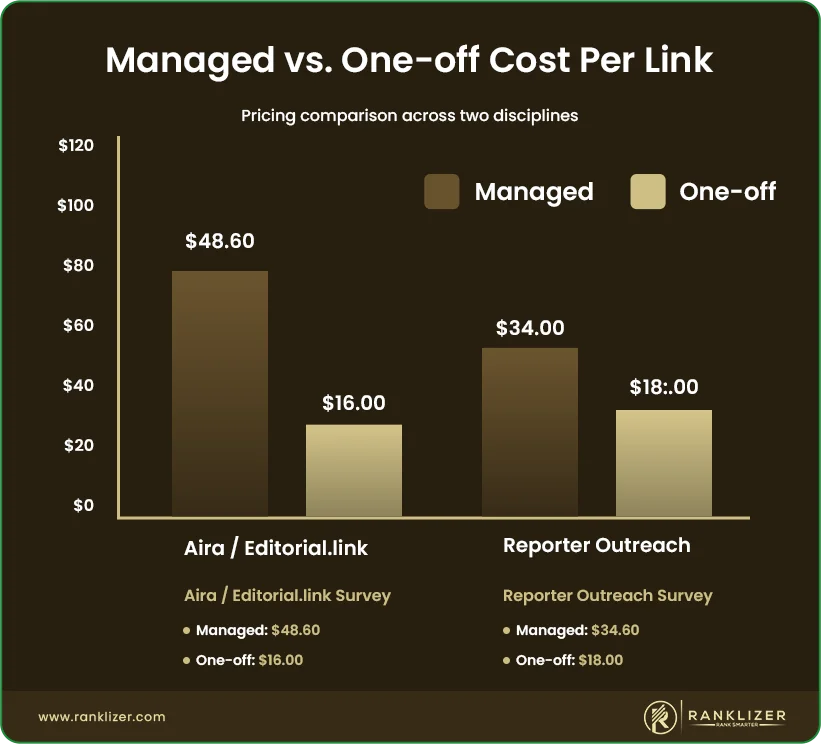
The same applies to cost efficiency. Guest posts average $365 to $461 per placement in managed programs, with high-quality posts running $930 to $3,130 as standalone buys, still meaningfully less than digital PR’s $1,250 to $1,500 one-off pricing, and that’s why guest posting is a viable option for businesses that don’t have a five-figure monthly link-building budget. Velocity matters too. A guest post can be pitched, negotiated, and published in days, whereas a digital PR campaign based on original research or a timely news hook can take weeks to conceive, execute, and place, if it gets placed at all. In the case of businesses that have a launch date or a seasonal window, that speed difference is not a luxury but a necessity.
Predictability completes the picture. Once you have a relationship with a publisher, you can expect a known outcome from guest posting, whereas digital PR has real uncertainty from pitch to media pick-up.
The Reliability Trade-off
The biggest problem with digital PR is not quality, it’s consistency, as campaigns rely on journalists making the choice to respond, and many don’t. Response rates to press outreach are notoriously low, and a press campaign based on a single data story can yield exceptional coverage, or it can yield nothing at all, with little middle ground and no way to predict which will happen before the pitchers start throwing.
One blogger’s experience of running a digital PR campaign alongside a guest posting campaign is a good example of the difference: the guest posts were consistently published week after week, albeit at a low but reliable volume, and the PR campaign was largely silent for nearly a month until a single high authority pick-up came along and outpaced all the guest posts combined. That contrast, steady but small versus rare but huge, is the trade-off in miniature. Guest posting is a solid base. Digital PR has a higher ceiling and a lower floor.
Digital PR vs Guest Posting: Cost Comparison
| Factor | Digital PR | Guest Posting |
| Cost per link (managed program) | $597 average, $750 agency-side | $365–$461 average |
| Cost per link (one-off/standalone) | $1,250 to $1,500 | $930–$3,130 for high-quality posts |
| Average placement DR | 61 to 70+ | Varies widely, 30–60 |
| Referring domains per campaign | Dozens of possibilities from one story | One per post, one domain |
| Anchor text control | Minimal to none | High |
| Turnaround | Weeks, uncertain | Days, predictable |
Cost figures based on BuzzStream’s Link Building Pricing analysis and Digital PR Cost Survey.
A Framework for Deciding
There are four practical questions that most comparison articles don’t ask, and they will determine the right discipline for your situation.
What is your monthly budget? At prices below about $2,000 per month, guest posting is going to be a more reliable way to get more consistent results than a digital PR campaign that needs a minimum spend to have a fighting chance at getting coverage.
Second, do you have proprietary data, such as customer research, internal analytics, or a unique survey? Newsworthiness is the lifeblood of Digital PR, and without a unique angle, campaigns struggle to succeed, even with a big budget.
Third, what is your time constraint? If you require links this month, rather than this quarter, the upside of digital PR is outweighed by the predictability of guest posting.
Fourth, how important is anchor text precision to your existing link profile? Guest posting will be much more useful for sites that are still working on topical relevance with exact match or partial match anchors than earned coverage, which rarely includes the anchor you would choose for yourself.
The Verdict: Lean Guest Posting Early, Shift to Digital PR as You Grow
Here’s the honest answer most agencies won’t give you straight: digital PR wins on raw ranking power. It lands the bigger, harder-to-buy placements and does more for your presence in AI search results. Guest posting wins on everything else — it’s cheaper, faster, and you don’t need a research team or a lucky news hook to make it work.
So the real question isn’t which one is “better.” It’s which one fits where your business stands right now.
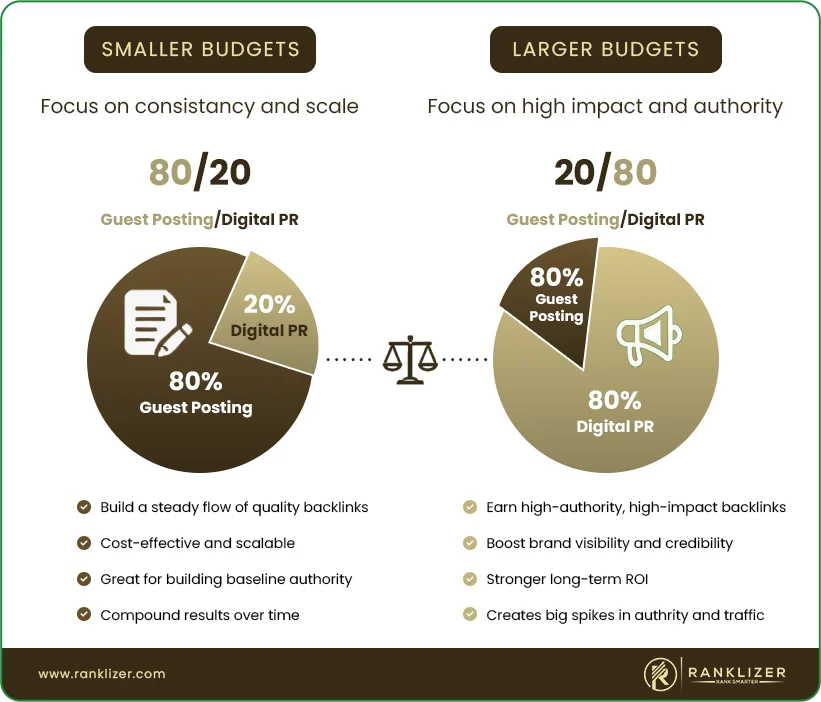
Under $3,000 a month and no data of your own to pitch? Stick close to 80% guest posting, 20% PR. Only chase press when a genuine hook falls in your lap — don’t force it.
Clearing $10,000 a month and able to run real research? Flip it. Put the bulk of your budget into digital PR. Yes, it’s messier and slower to land, but the payoff, both in authority and in how often AI tools cite you, is worth the wait.
And if you’re the type who’d rather work with editors who hold a real bar, not link farms wearing a media badge, that’s exactly the kind of work worth handing to someone who does it for a living.
Frequently Asked Questions
What is digital PR link building?
Digital PR link building involves creating original data, research, or newsworthy angles that are pitched directly to journalists, as opposed to negotiating a placement like guest posting. The link is not paid or pre-arranged, but rather a byproduct of a journalist’s decision to mention the story.
What is a good digital PR strategy?
A successful digital PR campaign begins with a real data hook, whether it’s original research, a survey, or an internal data set, and then matches that story to the right journalist on the right beat. The best strategies also monitor brand mentions and AI citations in addition to backlinks, as earned mentions are now also influencing visibility in AI-driven search results.
Is there a variety of digital PR strategies to select from?
Yes. These include newsjacking (responding to a trending story), original research or survey-based campaigns, expert commentary and reactive PR, and data journalism partnerships. The best approach will depend on budget, time, and whether the business has proprietary data to present.
What are the qualities of a good digital PR agency?
The best digital PR agencies are not link farms posing as media outlets, and they don’t create campaigns based on paid placements, but on real data or newsworthy angles. Seek out agencies that can demonstrate real earned coverage on relevant, high-authority sites, not just a high Domain Rating number.
Is in-house digital PR possible?
Yes. For companies with existing data they can pitch, like internal analytics, customer surveys, or original research, an in-house digital PR team can be effective. Companies that don’t have that in-house expertise tend to get quicker, more reliable results when they outsource to an agency.
So what makes the best digital PR campaigns?
The most successful digital PR campaigns are based on a story that is useful to a journalist’s audience, rather than a promotional angle. Journalists will be more likely to place a campaign based on a unique data set, survey, or newsworthy hook than a generic pitch, because it gives their readers something they can’t get elsewhere.
Which is better for a small business: guest posting or digital PR?
Guest posting is typically a better option for businesses that don’t have their own data or research to sell, as it has a fixed cost, time, and result. Digital PR is more valuable when there is a real hook to work with and enough budget to cover campaigns that don’t work.
Should both be done simultaneously?
Yes, for most businesses, but the division should be based on available resources, not a 50/50 split. Smaller budgets should focus on guest posting and opportunistic PR pushes, while larger budgets that have the capacity to do some real research can go heavier on the digital PR side of things.